Let’s face it — in Canada, winter doesn’t ask permission. And when it hits, a good old-fashioned snow shovel is still the first and most important line of defence. Whether you’re clearing the steps, digging out the car, or carving a path to your recycling bin, the right shovel can save you time, energy, and sore shoulders.
But not all shovels are created equal. Here’s a simple guide to help you find the best snow shovel for your body, your driveway, and your snow-clearing style.
Questions to Ask Before You Buy
What Kind of Snow Do I Usually Get?
Light and fluffy or wet and heavy? Coastal provinces often get slushy snow, while central and eastern regions can get piles of the dry, packable stuff. Different shovel shapes are better for different snow types, so knowing your usual conditions helps narrow the field.
What Am I Shovelling?
Short front steps? A full two-car driveway? A compact car buried by the plow? The size and type of space you’re clearing affect whether you need a wider scoop, a sturdy handle, or something more compact for tight areas.
How’s My Back?
If you have any back, shoulder, or wrist issues, ergonomics matter. Seriously. Some shovels are built with curves or rotating handles to reduce strain — and they can make a huge difference when you’re out there for the fifth time in a week.
Types of Snow Shovels
Scoop Shovels
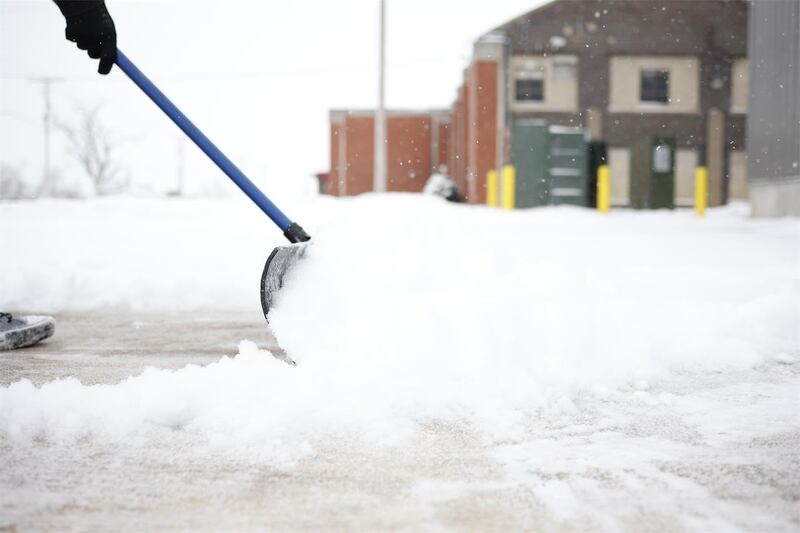
The most common style. These have a wide, flat blade and are designed for pushing snow off flat surfaces, like driveways and sidewalks. They work best with light or freshly fallen snow.
Best for: Quick clearing of light snow on smooth surfaces.
Combo Shovels
A mix between a scoop and a traditional shovel — slightly curved with a broader blade. You can use them to push snow or lift and toss when needed. Versatile and popular for a reason.
Best for: Everyday winter tasks, small-to-medium snowfalls.
Snow Pushers
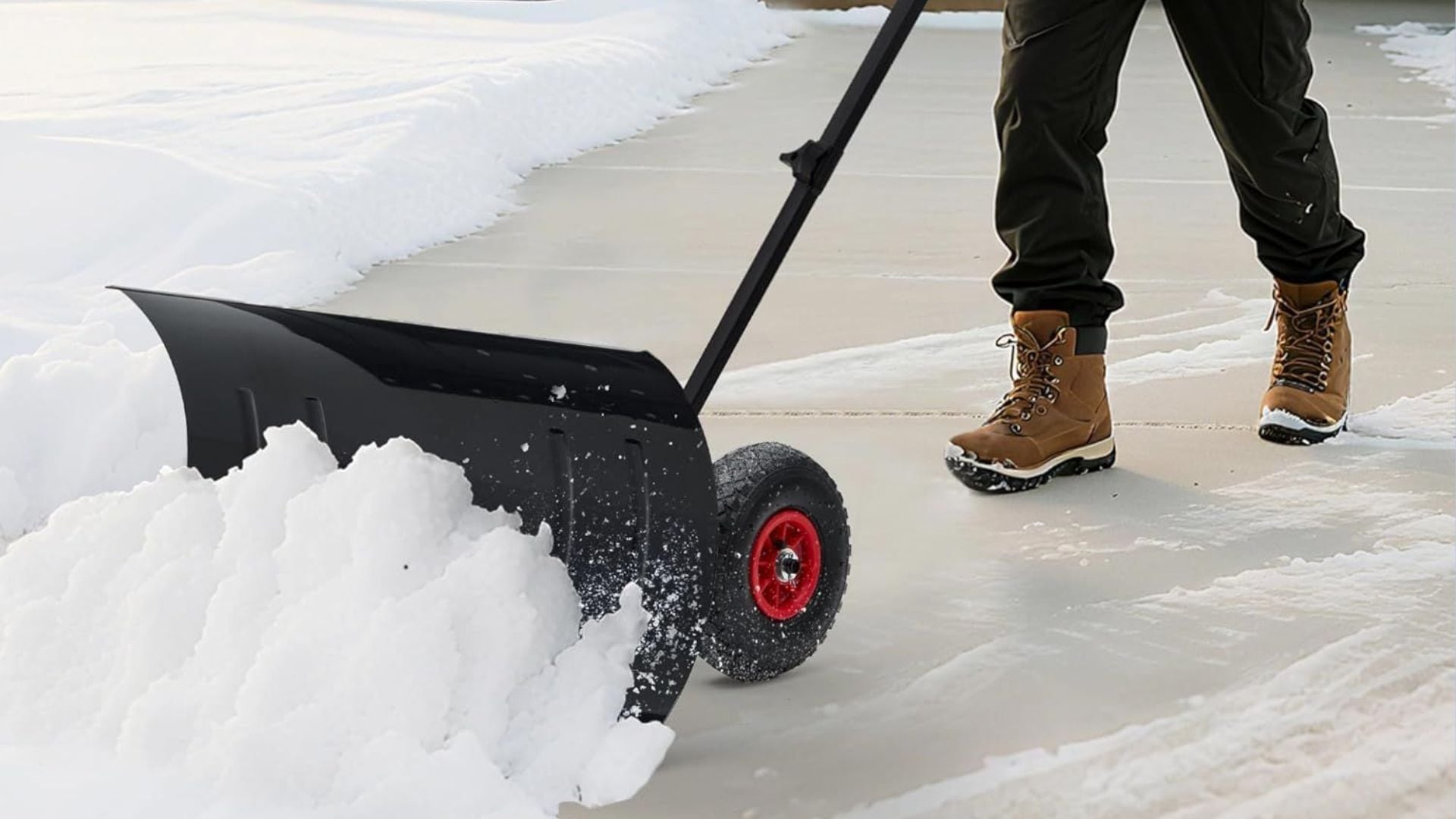
Designed specifically for pushing snow, not lifting it. They have very wide blades (up to 36″) and sometimes include wheels or U-shaped handles. Great for big flat areas and quick cleanups.
Best for: Long driveways, big patios, and people who don’t want to lift.
Snow Shovels (Lifting Style)
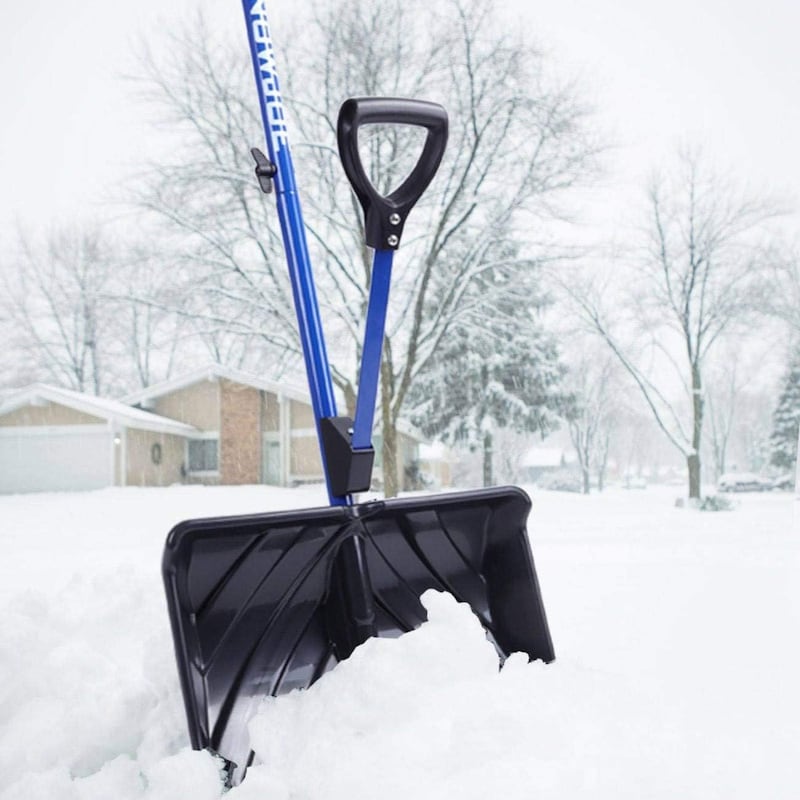
These have a narrower, deeper blade, ideal for scooping and tossing snow, like when you need to dig out the car or handle snow left behind by the plow.
Best for: Heavy, wet snow and digging out buried spots.
Ice Chippers or Scrapers
Technically not shovels, but still essential. These have sharp, flat blades to break up ice or packed snow that your regular shovel can’t handle.
Best for: Sidewalk safety and clearing stubborn layers.
Key Features to Look For

Blade Material
- Plastic/Poly: Lightweight, won’t scratch wood or decking, but may crack in extreme cold or under heavy snow.
- Metal (Aluminum/Steel): Tough, long-lasting, ideal for breaking up compacted snow — but heavier and can scratch surfaces.
- Plastic with a metal edge: A great middle ground for most homeowners.
Handle Material
- Wood: Traditional and durable, but heavier and can splinter over time.
- Aluminum: Lightweight and won’t rot, but it can feel cold in the hands.
- Fibreglass/Composite: Lightweight, strong, and doesn’t get as cold to the touch — usually the most ergonomic option.
Handle Design
- Straight handles: Simpler and better for lifting and tossing.
- Curved (ergonomic) handles: Reduce strain on the back — ideal if you do a lot of shovelling.
- Adjustable or telescoping handles: Great for shared households or storing in small spaces.
Grip and Comfort
Look for D-grips or soft padded handles to reduce fatigue and improve control. Bonus points if you’re shovelling in gloves or mitts.
Pro Tips for Picking the Right Shovel
- Don’t go too wide. Wider blades may look efficient, but they get heavy fast — especially with wet snow.
- Have more than one. A pusher for light snow + a narrow shovel for lifting heavy snow is a great combo.
- Store it indoors if you can. Cold makes plastic brittle — and that’s when you need it most.