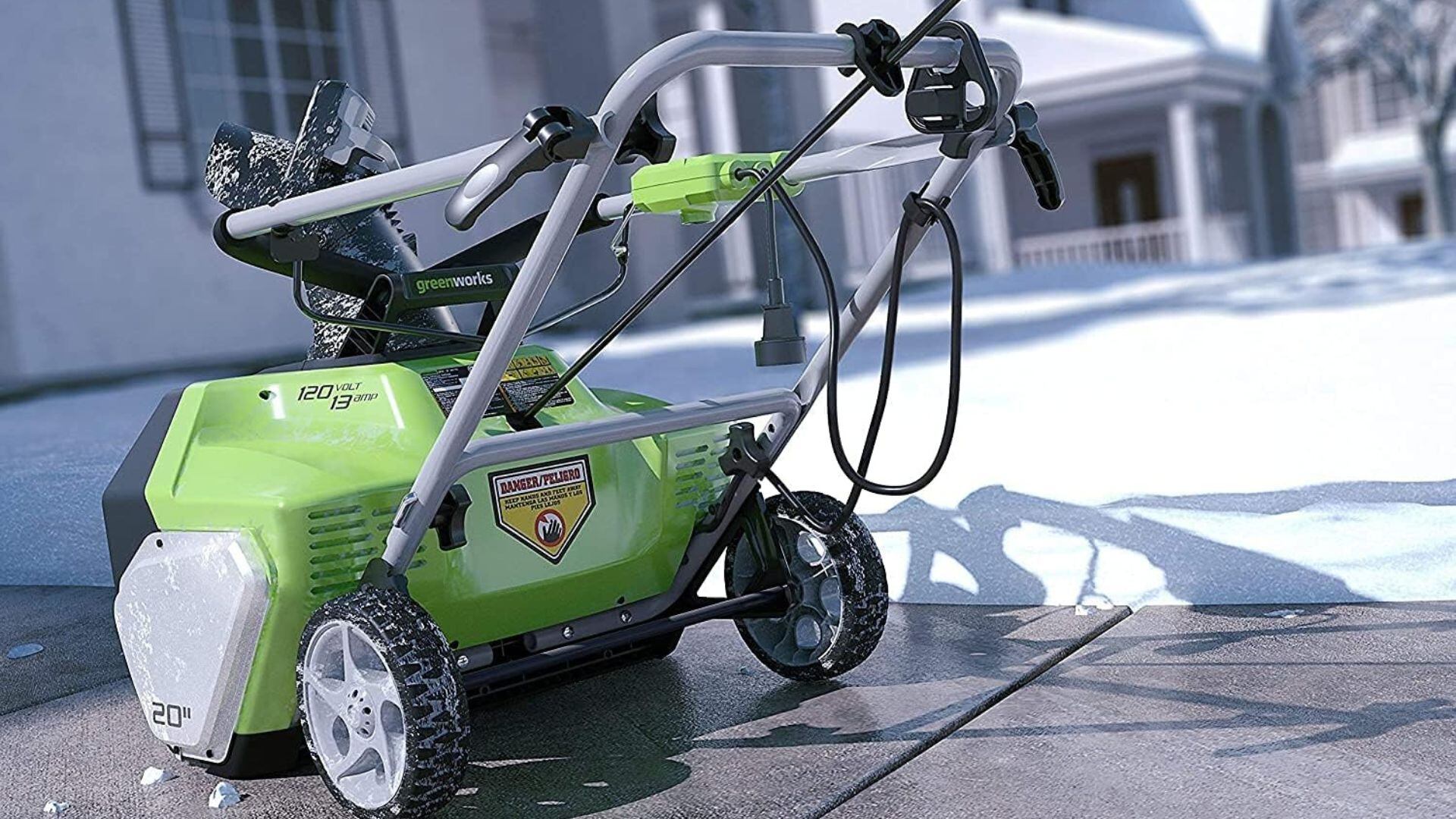
Whether you’re tired of shovelling after every storm or you just want to spare your back (and your driveway), an electric snow blower can make Canadian winters a lot more manageable. But with so many models on the market — corded, cordless, single-stage, dual-stage — figuring out which one you actually need can feel as complicated as predicting the next snowfall in Montreal.
Here’s a practical, straightforward guide to help you find the best electric snow blower for your needs, your climate, and your budget.
Questions to Ask Yourself
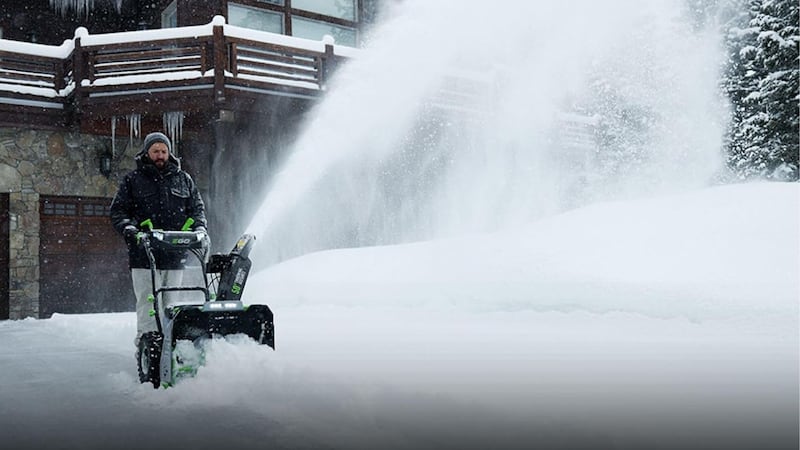
How Much Snow Do I Actually Get?
A few centimetres every week? Or two feet overnight thanks to a surprise Nor’easter? Electric snow blowers work great for light to moderate snow, but some models are better equipped for heavier dumps, especially the two-stage cordless ones.
What Type of Surface Am I Clearing?
Small wooden deck? Gravel driveway? Paved path to the garage? The type of surface you’re clearing affects whether you’ll want a single-stage (which touches the ground) or a dual-stage (which doesn’t). For gravel or uneven surfaces, you’ll want a unit that doesn’t scoop up rocks along the way.
How Much Area Do I Need to Cover?
Clearing a short walkway is very different from doing a triple-wide driveway in -20°C wind. Small corded models are great for quick jobs, but larger battery-powered machines can handle bigger spaces with fewer passes — and without the risk of running over your extension cord.
Types of Electric Snow Blowers
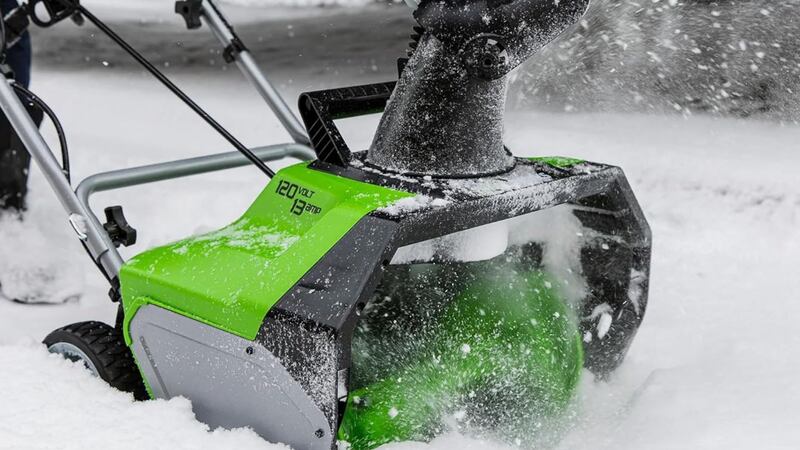
Corded Electric Snow Blowers
Plug them in, hit the switch, and go. These are lightweight, affordable, and ideal for small areas with light snow (under 15 cm). Just make sure you’ve got a good cold-rated extension cord and a nearby outlet.
Best for: Porches, steps, short walkways.
Cordless (Battery-Powered) Snow Blowers
Cordless snow blowers have come a long way. With powerful 40V to 80V lithium-ion batteries, they offer impressive performance without the fumes or pull cords of gas. Run times typically range from 30 to 60 minutes, depending on snow conditions.
Best for: Medium-sized driveways and typical Canadian suburbs.
Single-Stage Snow Blowers
These use a spinning auger to scoop and throw snow in one motion. They’re lighter and easier to manoeuvre, but best for paved surfaces and lighter snowfalls (under 20 cm). The auger touches the ground, so avoid gravel.
Best for: Light to moderate snow on hard surfaces.
Two-Stage Snow Blowers
These use an auger to gather snow and a separate impeller to throw it farther — up to 50 feet or more in some cases. They’re bulkier, but more powerful, and many cordless models now rival gas-powered units.
Best for: Heavy snowfalls, long driveways, or anyone tired of the snowplow berm at the end of the driveway.
Features That Matter
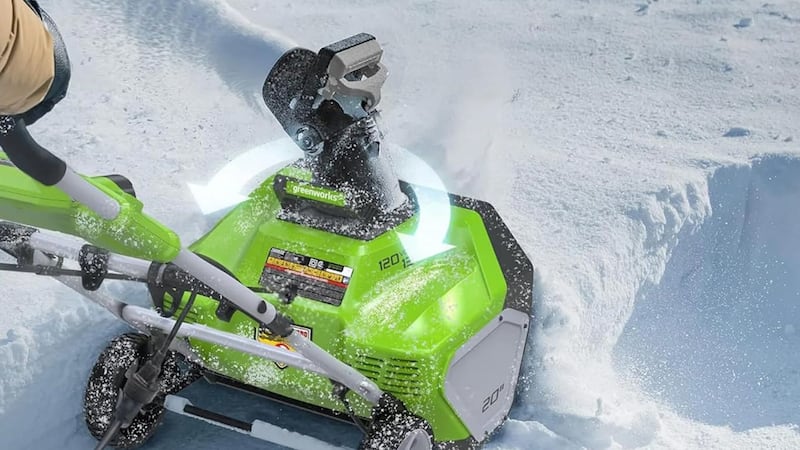
Clearing Width and Intake Height
Wider clearing widths (20″ to 28″) mean fewer passes. Taller intakes (10″ to 18″) can handle deeper snow. Make sure the model you’re eyeing can handle the average snow depth in your area — especially if you live in a snow belt like Quebec City or the Gaspé.
Battery Life and Charge Time
Look for high-voltage batteries (60V and up) and dual-battery systems if you want longer run time. Some models even let you hot-swap a second battery to keep going.
Check charge time too: some batteries take 4–6 hours to fully recharge, which is not ideal if the snow keeps falling.
Throwing Distance and Chute Control
The best models let you adjust the chute direction and angle easily (some even have remote controls). Look for throw distances of 20 feet minimum — more if you have wide paths or want to avoid burying your shrubs.
Heated Handles and LED Lights
Are they essential? No. Are they amazing at 6 a.m. in February? Absolutely.
If you plan to clear snow early in the morning or in the dark, LED headlights are more useful than you’d think. And if you hate cold hands, heated grips can be a game-changer.
Foldable Handles and Storage
Snow blowers are seasonal tools — unless you live in Nunavut. If space is tight in your garage or shed, look for models with collapsible handles and vertical storage options.